
See many other helpful BFF articles!
Check out these BFF articles!

The Key to Life
_____________
Living A Balanced Life

_____________

_____________

_____________

Discovering Your True Treasure
_______

_______

______

Three Keys to Effective Prayer
______
_____________

Psalm 63:1b
The Bible Teaching Commentary
2) Powerful prayers openly reveal their dependence upon God
Paul J. Bucknell
Psalm 63:1: We see this in Psalm 63:1. The great poet, king and general was a man who greatly depended upon God. He was convinced, though you might not be, that it was God who gave him success. If you think it was just natural gifting or luck, you are missing the picture. At least David would think so. Let’s listen to these powerful words of emptiness..
__________________________________________________________
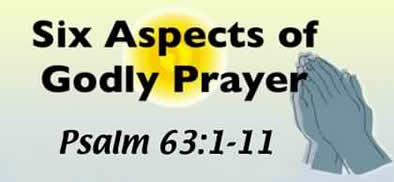
Introduction Psalm 63:1-11
1) Sincere prayers (Psalm 63:1a).
2) Powerful prayers (Psalm 63:1b).
3) Great prayers (Psalm 63:2).
4) Affectionate prayers (Psalm 63:3-5).
5) Uplifting prayers (Psalm 63:6-8).
6) Faith prayers (Psalm 63:9-11).
Study Questions on Psalm 63
__________________________________________________________
O God, Thou art my God; I shall seek Thee earnestly; My soul thirsts for Thee, my flesh yearns for Thee, In a dry and weary land where there is no water. (Psalm 63:1b)
‘Thirsts,’ ‘yearns,’ ‘dry,’ ‘weary,’ and ‘no water’ all describe a most barren and difficult situation. You and I would never guess that these are words from a great man. We don’t think of great kings and generals as being dependent upon God. We see the rippled muscles, the fat wallet, the luxury car, the letters behind his name, etc. But he was a man very dependent upon God. In fact, he wanted everyone to know it. More of that later. But let us first see what in this verse shows his great dependence upon God.
a) He knew his position. “O God, though art my God.” He was only a man. God was his God. He was not this prideful general, manager or inventor who thought he got what he had because of his greatness. God was key in his life not just because he thought so but because God was real. David’s secret was simple: He knew himself in light of God. Secularism destroys man because it allows him to see himself without God’s perspective. God made him who he was. And so he was consciously dependent upon God.
b) David committed himself to depend upon God in the future. “I shall seek Thee earnestly.” No matter success or failure, no matter if he was in the unexplainable wilderness of life or not, he knew his life was one that had a passion for God.
He would seek to develop that relationship no matter where he found himself or what would happen. Many of us fail here because God is only the God of convenience. We only worship when we have time in our schedule for Him and we feel like it. If that is the way you worship, then you have a sad and insulting view of God. Join David and make God the one you seek no matter if you get cancer, win a million dollars, get a great job at a growing startup or seem to be caught in a depressive static state of unemployment. David might not have had much responsibility in the wilderness but when a person learns to pray in such a manner as David, the very ground that he is on becomes a throne for the Almighty God.
c) David wanted to know God more. “My soul thirsts for Thee, my flesh yearns for Thee, in a dry and weary land where there is no water.” Water vividly reminds one of life. Whenever there is a drought, plants die; things turn brown. Life is not so exciting. The barren desert was this and more. Especially because this was not his home.
After all, he did not deserve being King Saul’s victim. But extreme situations for the man who seeks God are only different venues to meet God and varying conversations to have with God. He used the very curse of the ground to describe His longing and passionate desire to know God. We have a question here? Was he crying out, “My soul thirsts for Thee” because: (1) he felt like God was far away or (2) because he was close to God but was just expressing wanting to be closer to God? It seems as we read on that the later is true. He just wanted to know God more. God uses such times to draw the hearts of His people closer to Him.
If you feel that you need to be in control of circumstances in order to feel good about yourself, you will find that your prayers are often selfish expressions of your own welfare. You need to step into the hall of worship. Perhaps if you are unwilling to learn to worship where you are, you need to be brought into a wilderness experience to learn. Where day after day, year after year, it seems that you have lost control of everything. But it is there you discover the glory of God. It is there that you see God and are humbled, shamed and overawed at God’s holiness.
This is what he says is verse 4. But before going on, and we are eager to get there, we need to pause just a moment and reflect whether our prayers are about seeking God and His will or what we like and want? If the only things that will last unto eternity are those things that are borne out of an intimate relationship of God in prayer, then maybe we need a wilderness experience so that we can see God and conform our will to knowing and serving Him.
The world is so powerful, that many of us are unwilling to be pulled from it. Did you ever put a sock near a vacuum and feel the pull? That is like the world’s pull on our souls.
God leads us away from this pull so that we do not feel its powerful strength. But get close to it and you will again feel its power. Are you a bit like Lot’s wife. God wonderfully pulls you away from drugs, sex, pride, but you turn around and are caught once more in the cesspool of life? Whenever we are unwilling to dedicate our prized things to God, we have just shown that things are greater than God. We might say that we seek God but really we seek things. We just use God to get those things. Ultimately, we worship ourselves. Can you understand now that there are two kinds of desperate prayers?
One person is desperate so that he can continue on his life the way it was. God is a mere footstool. The other desires to know and serve God more than get back what he has. David was like this. And the wilderness was a test of these things in his heart.
Continue on: 2) Powerful prayers openly reveal their dependence upon God (Psalm 63:1b). Study Questions
1) Sincere prayers often derive from desperate circumstances (Psalm 63:1a).
2) Powerful prayers openly reveal their dependence upon God (Psalm 63:1b).
3) Great prayers always result from an encounter with God (Psalm 63:2).
4) Affectionate prayers respond to God’s love with adoration (Psalm 63:3-5).
5) Uplifting prayers reflect on God’s past marvelous works (Psalm 63:6-8).
6) Faith prayers enable one to face difficult situations with courage (Psalm 63:9-11).
Study Questions on Psalm 63Most of BFF articles are nicely formatted for printing or handouts including Psalm 63. Check out the great number of articles on the BFF Library all for one great low price including shipping and handling. Read here for testimonies.