
 BFF is now on Facebook! Please visit and join us in releasing God's powerful Word to our generation!

God's peace can help us live above anxieties as we learn to trust in Him!


The Bible Teaching Commentary on Genesis: The Book of Foundations
Commentaries that specialize on training the teacher!
Background and a Short Outline to Ezra
English Old Testament Bible
Paul J. Bucknell
Ezra: Introduction | Short outline || Extended outline | Study notes/questions | Revival Ezra9:8-10
Only the Great LORD is able to make the lost saved, the corrupted purified and the forsaken precious. God steps into ancient world events to restore His temple worship. If the first testimony of rebuilding the great temple is insufficient proof of God's power, then the second testimony of changing his people's hearts becomes the sure confirmation of God's glorious work.
| I. Rebuilding the Temple (Ezra 1-6) Ezra 1 The Decree to Rebuild the Temple Ezra 2 The Returning Exiles Ezra 3 The Temple Restoration Begins Ezra 4 The Adversaries Halt Restoration Ezra 5 The Resumption of the Restoration Ezra 6 The Temple is Completed II. Purifying the People (Ezra 7-10) Ezra 7 Ezra is Appointed by King Artaxerxes Ezra 8 Ezra Leads the Exiles to Jerusalem Ezra 9 Ezra Intercedes on Behalf of Israel Ezra 10 Ezra Purifies the People |
 |
|
As we look forward into time, we find that the Israelites never could find a true fulfillment for the OT promises of a king with real power. In 2 Samuel 7:12-17 the LORD promised a king from David's line that would rule forever.

From the exile on right up to the time of Jesus, the people were always under foreign domination. The temple became a focal point, but also a point of frustration. In Jesus' time, many were looking to overthrow the foreign armies in Jerusalem. King Herod even had one garrison lodged right at the edge of the temple court that his father had greatly expanded starting in 19 BC.
In the end we see that the old temple was going to come down. A new one would be built. This new temple would be built on the third day. The Lord Jesus Christ, a descendant of David, fulfilled this and other prophecies. The second temple was destroyed in 70 AD. Yet Christ reigns forever!
"Jesus answered and said to them, (John 2:19-21). |
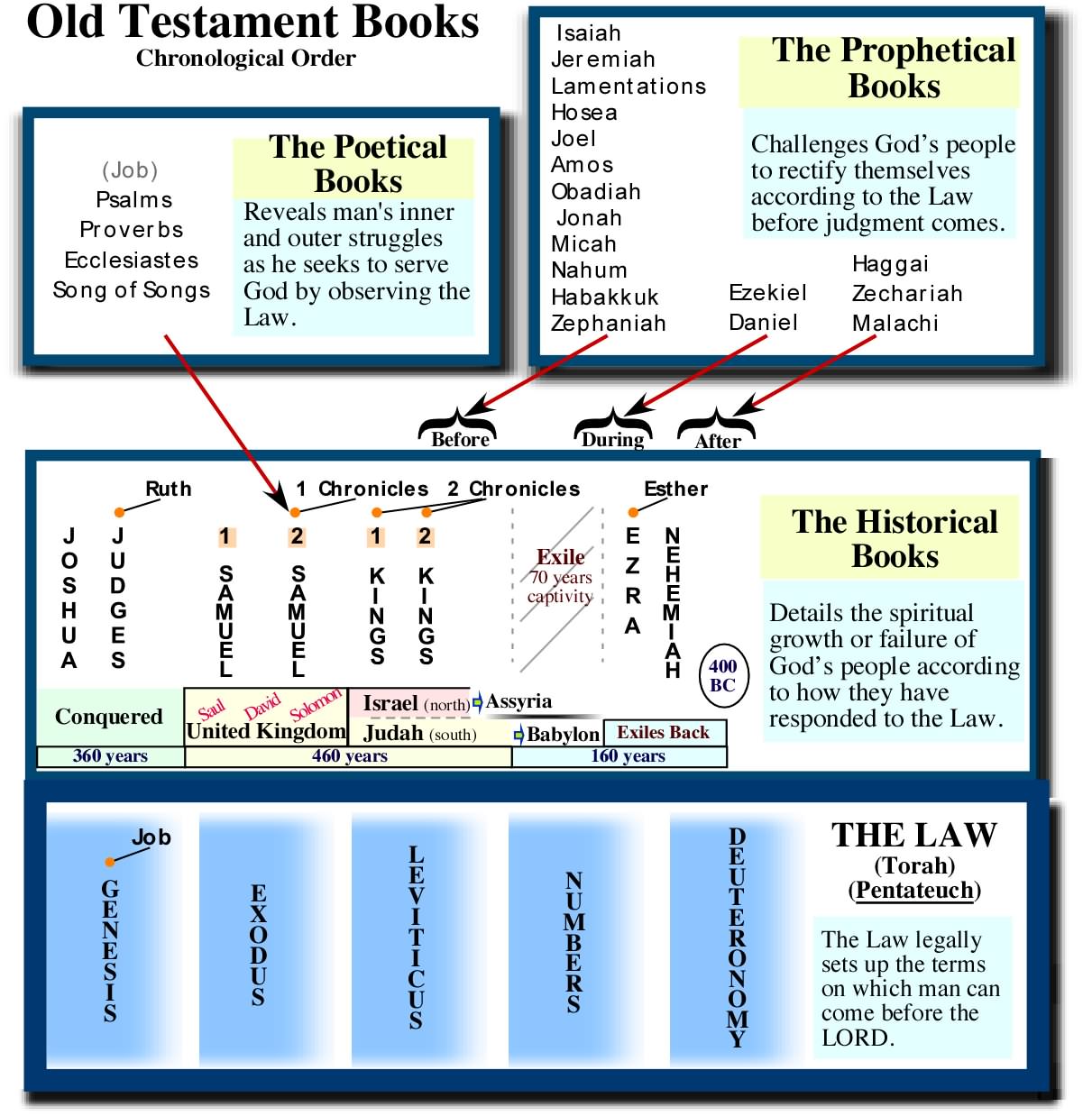
Old Testament Bible Chronological Chart
BFF Homepage | Back | Top| Background | Outline | Questions
Old Testament Geographical Historical Survey | Hebrew Old Testament Book Order

The Extent of the BibleWhy aren't other books part of the Bible?
The Bible's Challenge | Transformation | Canonization| Extent | Inspiration | Reliability | Relevance | Version | Download
|
BFF resource store
Building a Great Marriage: God's Design, Your Marriage! || Christian Premarital Counseling
Preparing the Two to Be One || Principles & Practices of Biblical Parenting
Raising Godly Children || The Godly Man: When God Touches a Man's Life
Overcoming Anxiety: Finding Peace, Discovering God
Cross Training Discipleship: Relational Discipleship | Abiding in Christ: Walking with Jesus || 3 X E: Discipling One to One || The Life Core: Discovering the Heart of Great Training || Running the Race
Overcoming Sexual Lusts | Redemption Through the Scriptures
Gaining a Clearer Picture of Christ and His Work | Reaching Beyond Mediocrity: Being an Overcomer! || Genesis
The Book of Foundations || The The Bible Teaching Commentary on Romans
Laying a Solid Foundation
Discipleship 1 Library | Discipleship 2 Library | Discipleship 3 Library | Marriage Library | Parenting Library
Old Testament Library | New Testament Library
Plus many other articles, podcasts and contributions to The Bible Teacher's Commentary on the web!
BFF Homepage | Top | About us | Pray for us | BFF's Approach | BFF Store | BFF RSS | Topics | OT | NT
Biblical Foundations for Freedom ( BFF )
Rev. Paul J. Bucknell
Follow @PaulJBucknell
info@foundationsforfreedom.net
Scriptures typically quoted from the New American Standard Bible unless noted:
(C) Copyright The Lockman Foundation 1988