Gaining Perspective
Deuteronomy 2-3
The Bible Teacher's Commentary
Paul J. Bucknell
God seeks the hearts of mankind. Like a father, though distant, He looks for His wayward son to return. And so, our God is searching for the lost. Over time, God intervened in man's path to destruction to spare and save him.
Deuteronomy is a book that helps us see God’s unwavering faithfulness, as He continues to reach out to those who have rejected His word. Just as a professing Christian may be turned away from the church or captivated by the world, God seeks to call them back. The purpose of Deuteronomy is to remind God’s people of His faithfulness and kindness, so they may embrace His future for them.
Although Deuteronomy was written long ago, around 1500 BC, it remains highly relevant to God’s people today. People often drift away from God’s presence, and there doesn't seem to be much hope except for the illustration here of God’s patience in dealing with His people. Just this past week, a brother I was talking to nearly started crying as he reflected on how far God’s people have wandered from His presence.
Deuteronomy appears best divided into four sections that help restore us to a strong and full relationship with Him. We can see it as God’s steps of faithfulness. This first step focuses on: A. Reconnecting with God’s Purpose (Chapters 1-4). A new generation grew up before Moses, but God’s purpose stayed the same. Through a detailed review of events—both good and bad—Moses reorients that generation to God’s unchanging purposes.
Application
Each generation has its chance to understand and engage with God in His greater plans. We have the opportunity to be among those who listen, turn to God, and witness His mighty works in our midst. Every generation faces the tension between loving God and the pull of the world. What is your response?
Our Path

Each of us has part of our own life experience. This is our past or history. Each of us was born into a specific time and cultural context. We all face our own challenges. This section in Deuteronomy helps us relive the experiences of God’s people many years ago. What is written in these chapters allows us to understand why and how to return to the Lord with a fuller vision.
My wife and I recently visited Williamsburg, Virginia. It serves as a living history lesson, illustrating many aspects of the American Revolution. The main pathway from the parking lot into the historic area was very interesting because of certain things imprinted in the ground.
Every few steps, there was an engraving indicating what was happening or not happening at that time in history. In 1940, no one had television sets. They continued back in time until one reading indicated you were now entering the time around 1776. There, we saw people in full costume, speaking as they did then, with original houses and plantations that looked just like they did back then. We're doing something similar in this series on Deuteronomy.
A Closed and Open Door
We will move forward, but God first wants to lead us through the past. Deuteronomy 2-3 continues from the end of chapter 1, where they were at Kadesh-Barnea. That was a very important spot. They rebelled against the Lord there. It was similar to any of our church or leadership meetings. They cast their votes and decided not to go in. Yes, they had their reasons.
They had two opposing sides. But when their decision went against what the Lord told them to do, the first entry into the Promised Land was closed. That was the only door that generation would ever find. The implication is that they would never enter the Promised Land. What could have been a few years of transition ended up locking them out forever.
“Then the LORD heard the sound of your words, and He was angry and took an oath, saying, ‘Not one of these men, this evil generation, shall see the good land which I swore to give your fathers,” Deuteronomy 1:34, 35).
God’s amazing faithfulness (our victories) (2, 3)
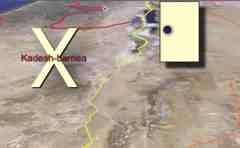

What surprises us most is that the story continues. Yes, that generation never gets to enter, but God creates a new setting for the next generation. The name Deuteronomy comes from the Latin ‘second law’ or ‘covenant’. The first covenant given in Exodus was, so to speak, rejected by the first generation. They refused to obey the Lord. However, God was giving this second generation a new opportunity, a second chance for Israel as a whole.
After 38 years, the Lord opened another door to the Promised Land. We will journey through these two chapters, following the passing years with them, and move right up to that Promised Land. Remember, this is history—not just for us but for the original listeners. Moses recorded this for the second generation, presenting these things so they might obey and enter the Promised Land. For us, it’s a reminder of what is so important for us at this point in our lives.
You might think of your busy school schedules, frustration with finding a good job opportunity, learning how to care for a little one, or waiting eagerly for the right spouse. But brothers and sisters, our life is not really about these things. There are decisions behind these decisions. As much as we consider ourselves individuals making our own choices, we are also God’s people. Our responses and opportunities are connected. What is God trying to do in our lives? Have we rebelled against His purposes? Have we been so focused on securing a good place in the world that we have actually overlooked the greater things He has planned for you and us as a whole? These are important questions. One door has been closed.
Will we enter the other? As much as we say that we want to understand God’s will, remember that if He reveals what He wants, then you are responsible for this knowledge. On the positive side, God desires to give us the best. He has prepared it for us. He shares the greatest spiritual blessings recorded for us in Ephesians. “He has blessed us with every spiritual blessing in the heavenly places in Christ” (Ephesians 1:3). What we find interesting is how the Lord reviews their life history together.
Reflecting on the Past
I just returned from celebrating my 30th wedding anniversary. An important part of that celebration was reflecting on what God has done for Linda and me. We talked a lot about life and our marriage. For example, Linda commented on how I often say, “We have a great marriage!” She explained, “It has not always been so good” (She wonders whether I remember those times.)
How can I say that our marriage is so great? I know we have faced struggles. Our marriage has endured many challenges. We’ve had our own personal battles with our flesh so we could be truly devoted to each other. I told her that I haven’t forgotten these times. But I am so thankful that we have been able (1) to reach this point and (2) to be with her through these difficult times. A strong marriage is built on many good decisions over the years.
Looking back on our lives is important. As I get older, I value this historical perspective more and more. I can now step back one, two, three, or even four decades to reflect on life then and now. Grace is what we discover when we walk along this historical trail. Even if you are just ten years old or have passed your twenties, I encourage you to start noticing what God is doing in your life. The events you experience, including struggles with pimples, finding friends, a partner, patience, and more, are all meaningful markers in your life. They are your chance to see God working.
The Box

A good friend of mine, Bob, who is the president of a Christian inner-city mission, once shared with me his precious miracle box. Inside are all sorts of wonderful things God has done in this ministry. Each item represents a special event. Let me introduce three items from this treasure chest of memories.
1) A blue Matchbox van symbolizes a miraculous answer to prayer for transportation for their Club kids.
2) A photocopy of a five-figure check, written by a stranger to the ministry and unknown to the board, at that very moment the board was deliberating on starting a new program. The board decided that, to be financially prudent, they should not move ahead of God and would start this new ministry only when God provided start-up funds. God wanted them to start right away!
3) A toy spider reminds us of the girls' cabin at camp, where they were away from home for the first time. The girls were terrified of the wolf spiders that had infested their cabin and refused to be eliminated by spraying, swatting, or other methods. They prayed simply, humbly, and urgently — some of them for the first time in their lives — and from that moment on, they saw no more spiders during the rest of their stay at camp.
Do you see what he has done? At some point in his ministry, he said, "God is doing great things here." We are His people. We belong to Him, and we will watch Him do great things according to His love and faithfulness. God wants us to also notice how He is working. What have you seen God do? What was so special about it?
God’s Extreme Grace (Deut 2-3 overview)
We will briefly examine how God led His people. This account is more meaningful than our own stories. It has been recorded in His Word to influence how we see our lives.
In every case we examine, a clear message should emerge: God is faithful and gracious. He treats us better than we deserve. We cannot live without Him, and we do not want to. In chapter one, we saw how stern God can be. He is serious about how His people live. If this were the only way we saw the Lord, it would be incomplete. God has revealed Himself in a much fuller way here.
“Know therefore that the LORD your God, He is God, the faithful God, who keeps His covenant and His lovingkindness to a thousandth generation with those who love Him and keep His commandments; but repays those who hate Him to their faces, to destroy them; He will not delay with him who hates Him, He will repay him to his face” (Deuteronomy 7:9-10).
His sternness or severity (Romans 11:22) is not his bad side like we might describe a person in their mood swings. This is the Lord. We might want to change the way He is or feel apologetic for some of His decisions, but He does not. God cannot be improved. The wise person understands God and responds properly to Him. In Deuteronomy 1, Moses described how God was angry with His people (1:34) and even with Moses (1:37).
The consequences were clear to the next generation. It was their parents, uncles, and aunts who died in the wilderness. If they had obeyed, they could have entered the Promised Land within two months of leaving Egypt, but now all their bones are buried in the wilderness sands.
Chapters 2 and 3 show how God is very generous with grace. Remember, this chapter is based on chapter 1, where God severely punished His people. (Of course, even here, God showed His grace.) In chapters 2 and 3, we see God’s kind treatment of the same people. Yes, the older generation was going to die off, but why was God being so patient with the second generation? Chapter 2 begins at Kadesh-Barnea and takes them on a survey of their 38-year journey to the second entrance of the Promised Land.
Steps of Grace
We will first examine these steps of grace, then specifically apply them as a whole to our lives. As we consider their challenges and the precautions they require, we should seek the Lord to understand what they mean for us.
Pass through Edom (Deuteronomy 2:1-8,12)
Then we turned and set out for the wilderness by the way to the Red Sea, as the LORD spoke to me, and circled Mount Seir for many days. “And the LORD spoke to me, saying, ‘You have circled this mountain long enough.
Now turn north, and command the people, saying, “You will pass through the territory of your brothers the sons of Esau who live in Seir; and they will be afraid of you. So be very careful; do not provoke them, for I will not give you any of their land, even as little as a footstep because I have given Mount Seir to Esau as a possession.
“You shall buy food from them with money so that you may eat, and you shall also purchase water from them with money so that you may drink. “For the LORD your God has blessed you in all that you have done; He has known your wanderings through this great wilderness. These forty years the LORD your God has been with you; you have not lacked a thing.”’” (Deuteronomy 2:1-7)
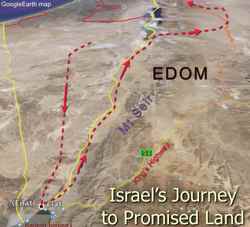
The Israelites were not allowed to cause any problems in the land of Edom. This land was given to the descendants of Esau. Perhaps the land of Edom got its name from Esau’s red hair, since Edom means ‘red’. They lived around Mt. Seir (see more in Genesis 36). Why did Edom not allow them to go through even though they promised to pay for their food and drink? We are not sure. The passage itself mentions the fear of the Edomites. They were commanded by God not to provoke them. We see from the comments on how they were to pay for their food and needs that God had sufficiently taken care of them. It’s also possible that Edom’s refusal to let Israel pass through to walk on the King’s Highway was due to the strained relationship between Jacob and Esau’s descendants over the years.
The King’s Highway was the usual and easiest route of travel. Mount Seir refers to a whole range of steep mountains. The refusal of the Edomites to allow Israel to pass through is not mentioned here in this passage. One needs to look at Numbers 21 to read about this in more detail. In Numbers 21, it describes the route they took. They seem to have traveled along the west side of Edom, ascending the barren valley of the Arabah from Elath (Ezion-Geber—north of its current location) up to the southern end of the Dead Sea, then heading east along a river valley between Edom in the south and Moab in the north.
This detour was very difficult. It was during this very trip that we find the Israelites grumbling (Numbers 21:5), though it is not mentioned here. God is willing to forget. Instead, God only emphasizes that He wonderfully provided for them. They evidently let the hardships of traveling through that rough land overshadow what was true. God even said, “You have not lacked a thing.”
Do you see that God was focusing them on His provision rather than their lack of faith? God was shaping their history by guiding them to think rightly about the Lord. Paul says ‘renew your minds’ (Romans 12:1).
Was traveling through the land difficult? Most certainly. We shouldn’t imagine it as a pleasant river valley but as a dangerous, hot trail winding through sharp ridges. God had His principles, however, and they would remain steadfast. Someone might argue that they had every right to traverse this main trade route through Edom, but God did not want to trouble them. Remember, this was not just a few people passing through the land, but an entire nation.
(2) Pass through Moab (Deuteronomy 2:8-18)
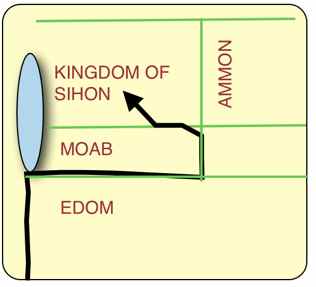
Moab was a descendant of Lot, just like Ammon (see the following section). The Lord watched over their territory just as He did for Edom. The Lord gave Ar, the capital, to the Moabites.
“So we passed beyond our brothers the sons of Esau, who live in Seir, away from the Arabah road, away from Elath and from Ezion-geber. And we turned and passed through by the way of the wilderness of Moab. “Then the LORD said to me, ‘Do not harass Moab, nor provoke them to war, for I will not give you any of their land as a possession, because I have given Ar to the sons of Lot as a possession” (Deuteronomy 2:8-9).
They were not to ‘harass’ Moab or provoke them to war. The Lord was again very clear about what they should and should not do. The simplest way would have been to travel through the middle of Moab along the King’s Highway, which runs north and south. It’s unclear whether Moab refused them access like Edom did, but the fact remains that they chose to go around Moab. Although not mentioned here, Moab and Ammon refused to trade food with the Israelites. “No Ammonite or Moabite shall enter the assembly of the LORD” (Deuteronomy 23:3).
They traveled northward to the Dead Sea, then went east along the River Zered, which flows between Edom and Moab. The exact route is unknown. Places like Oboth and Lyeabarim mentioned in Numbers 21:11 are not well documented, with only brief descriptions available. The description of the location, “in the wilderness which is opposite Moab, to the east,” indicates they circled around Moab rather than taking the direct King’s Highway. They approached from the east (the right side on the diagram).
God also maintained separation between the communities. The entire incident with Balaam is not mentioned here. By keeping a sense of fear among the communities, the Lord ensured the uniqueness of the Israelites. Balaam eventually exploited the merging of the communities to cause destruction, which Phinehas quickly stopped (Numbers 25:7). Once again, we see God emphasizing the importance of the Israelites’ obedience in avoiding harassment of Moab, while omitting details about their sins.
Crossing the Brook Zered (a wadi that sometimes has water and often does not) is noted as the point where all the older generation had died off. This was not just a casual remark but carried a tone of severity. The hand of the Lord was against them.
“Now the time that it took for us to come from Kadesh-barnea, until we crossed over the brook Zered, was thirty-eight years; until all the generation of the men of war perished from within the camp, as the LORD had sworn to them. “Moreover the hand of the LORD was against them, to destroy them from within the camp, until they all perished” (Deuteronomy 2:14, 15).
With the older generation gone, they were free to start something new. God was faithful to His oath. Notice this emphasis again on God’s faithfulness (even though we might not want to attach His faithfulness to these matters).
(3) Pass through Ammon (Deuteronomy 2:19-23)
Ammon was the third country they passed through without fighting. Ammon was like Moab, a descendant of Lot. Abraham probably shouldn't have brought Lot into the land, but now that he had, they have to deal with the consequences.
The Ammonites, like the Moabites, refused to provide water and food to the Israelites. The Israelites intentionally avoided the Ammonites because the Lord instructed them to do so.
“And when you come opposite the sons of Ammon, do not harass them nor provoke them, for I will not give you any of the land of the sons of Ammon as a possession, because I have given it to the sons of Lot as a possession.’” (Deuteronomy 2:19).
The Lord wants to be known as faithful. In this case, we see He did not play favorites. He respected the rights of all, and in this situation, that included their land. The Lord gave the land to whomever He chose. Some may challenge the Lord’s arbitrariness or suggest that God is a God of wrath, but we see that God is very deliberate and purposeful. He keeps His Word. We are not saying that the Moabites or Ammonites were good people (they were not) or that they had adopted Yahweh. Clearly, they had not.
“Then Solomon built a high place for Chemosh the detestable idol of Moab, on the mountain which is east of Jerusalem, and for Molech the detestable idol of the sons of Ammon” (1 Kings 11:7).
They would be enemies of God’s people for a long time, along with their horrible religious practices.
(4) Defeated King Sihon (Deuteronomy 2:24-37)
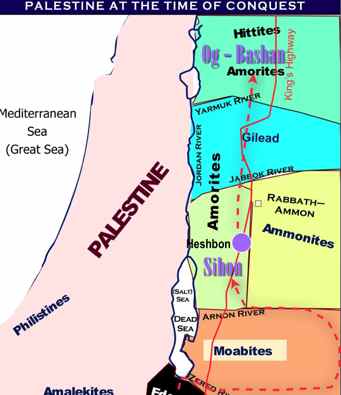
“Arise, set out, and pass through the valley of Arnon. Look! I have given Sihon the Amorite, king of Heshbon, and his land into your hand; begin to take possession and contend with him in battle. ‘This day I will begin to put the dread and fear of you upon the peoples everywhere under the heavens, who, when they hear the report of you, shall tremble and be in anguish because of you.’
“So I sent messengers from the wilderness of Kedemoth to Sihon king of Heshbon with words of peace, saying, ‘Let me pass through your land, I will travel only on the highway; I will not turn aside to the right or to the left. ‘You will sell me food for money so that I may eat, and give me water for money so that I may drink, only let me pass through on foot, just as the sons of Esau who live in Seir and the Moabites who live in Ar did for me, until I cross over the Jordan into the land which the LORD our God is giving to us.’ “But Sihon king of Heshbon was not willing for us to pass through his land; for the LORD your God hardened his spirit and made his heart obstinate, in order to deliver him into your hand, as he is today. “And the LORD said to me, ‘See, I have begun to deliver Sihon and his land over to you. Begin to occupy, that you may possess his land.’ “Then Sihon with all his people came out to meet us in battle at Jahaz.
“And the LORD our God delivered him over to us; and we defeated him with his sons and all his people. “So we captured all his cities at that time, and utterly destroyed the men, women and children of every city. We left no survivor. “We took only the animals as our booty and the spoil of the cities which we had captured. “From Aroer which is on the edge of the valley of Arnon and from the city which is in the valley, even to Gilead, there was no city that was too high for us; the LORD our God delivered all over to us. “Only you did not go near to the land of the sons of Ammon, all along the river Jabbok and the cities of the hill country, and wherever the LORD our God had commanded us” (Deuteronomy 2:24-37).
Only in the last two places they visited does a war occur. They were walking along the valley of Arnon, which separates Moab from the land of King Sihon. The Lord told them from the beginning that He had given Sihon, the Amorite king of Heshbon, into the Israelites’ hands. God would send fear into their hearts (2:25).
They sent messengers to King Sihon, requesting safe passage, assuring him they would not disturb the land and would pay for food and water. God would cover what they used. However, Sihon, king of Heshbon, hardened his heart and fought Israel. Sihon lost the battle, and Israel rightfully occupied the land. Again, Israel was passive in this—they were just walking through the land. This is a common situation here or in the Promised Land across the Jordan. A few incidents like Jericho are exceptions. Most battles were provoked by others.
Hardening the heart
Although we see that they safely pass through, we should note that the scriptures tell us that God hardened the King of Sihon’s heart. “But Sihon king of Heshbon was not willing for us to pass through his land; for the LORD your God hardened his spirit and made his heart obstinate, in order to deliver him into your hand, as he is today” (Deuteronomy 2:30). We are meant to understand that God is intricately involved in our life affairs. Whether it involves a king or a little boy in a pasture, remember how God appeared to Laban in a dream warning him not to harm Jacob? God is involved.
Hardening someone’s heart is more difficult for certain people in this modern, independent society. They believe that God should not interfere in a person’s affairs. This situation was similar when Israel was about to leave Egypt. The Lord hardened Pharaoh's heart. Ten times, the Bible mentions Pharaoh's heart; only five of those times say that the Lord hardened it. The other times describe how Pharaoh hardened his own heart. This was likely a similar situation but not described in as much detail as in Pharaoh’s case. King Sihon also hardened his heart, and God hardened his heart. The Lord states that when someone does not show mercy, they will not receive mercy. This is important for us to consider when reflecting on what it means that God hardens someone’s heart.
God hardens a heart by withdrawing grace. Think about what happens when the light is taken away from the sky. What occurs? Darkness spreads in. This is similar. God is light and extends His mercy over His creation. He protects the living by giving His grace. If He were to withdraw His undeserved kindness, then the devil gains full control of the person or nation. Darkness enters.
God is not adding evil, but withdrawing His maintaining grace. This can be hard for some to accept because they believe that God owes us His grace and mercy. But actually, He only owes us judgment. When judgment comes, He withdraws His grace. See a few verses below that support this understanding.
“Has God forgotten to be gracious? Or has He in anger withdrawn His compassion? [Selah” (Psalms 77:9).
“For thus says the LORD, “Do not enter a house of mourning, or go to lament or to console them; for I have withdrawn My peace from this people,” declares the LORD, “My lovingkindness and compassion” (Jeremiah 16:5).
“‘So as I live,’ declares the Lord GOD, ‘surely, because you have defiled My sanctuary with all your detestable idols and with all your abominations, therefore I will also withdraw, and My eye shall have no pity and I will not spare” (Ezekiel 5:11).
This is why an unseen dark evil creeps over a land before judgment. These verses pertain to God’s people, but the way God works is the same. There are other passages that reveal the same about how God acts in a given situation (Hosea 5:6; Jonah 3:9).
Gives the land
Through these verses, we see another clear way God involves Himself in the world’s affairs. In truth, these are His affairs. The problem is that man insists that God has no rights in the world He has made!
Given the Land
De 2:5 do not provoke them, for I will not give you any of their land, even as little as a footstep because I have given Mount Seir to Esau as a possession.
De 2:9 “Then the LORD said to me, ‘Do not harass Moab, nor provoke them to war, for I will not give you any of their land as a possession, because I have given Ar to the sons of Lot as a possession.
De 2:19 ‘And when you come opposite the sons of Ammon, do not harass them nor provoke them, for I will not give you any of the land of the sons of Ammon as a possession, because I have given it to the sons of Lot as a possession.’
De 2:24 ‘Arise, set out, and pass through the valley of Arnon. Look! I have given Sihon the Amorite, king of Heshbon, and his land into your hand; begin to take possession and contend with him in battle.
De 3:18 “Then I commanded you at that time, saying, ‘The LORD your God has given you this land to possess it; all you valiant men shall cross over armed before your brothers, the sons of Israel.
De 3:19 ‘But your wives and your little ones and your livestock (I know that you have much livestock), shall remain in your cities which I have given you,
De 3:20 until the LORD gives rest to your fellow countrymen as to you, and they also possess the land which the LORD your God will give them beyond the Jordan. Then you may return every man to his possession, which I have given you.’
When we examine what is actually said more closely, we see that the Lord references this seven times in these two verses. Sometimes He talks about God giving the land to Israel; other times He confirms that He has given it to someone else or a different country. To the Israelites, God says regarding Moab, “I have given Ar to the sons of Lot as a possession” (De 2:9).
When God deems it appropriate, He hands over the land to someone else, as in this case. “And the LORD said to me, ‘See, I have begun to deliver Sihon and his land over to you. Begin to occupy, that you may possess his land.’” Deuteronomy 2:31). God was doing it, but they were responsible for their own part.
All land belongs to God. No individual or country truly owns what they possess. There has always been a former tenant, the Lord, who has never relinquished His authority over the land. Nothing immoral is happening here. The previous verses describing how the King of Sihon attacked the Israelites are likely just to show that the land was taken as booty by King Sihon.
Application
No man or country ‘owns’ their land. They are obligated to live rightly. At any time, the Lord can send someone to take it away. Man is a steward. On the one hand, people are told to obey their authorities, but on the other hand, the Lord gives the land to whom He wishes. In this case, the King of Sihon was forgotten; his land was given to another. The land of Canaan, on the other side, was due justice.
God will not justify their evil; it is clear through His patient 430-year wait. But here, the Lord speaks plainly. This was not the first battle, but it was a clear model for fighting on land. They saw God fight for them. Look at what they said, “No city ... was too high for us” (Deut 2:36). God was with them. Their victory did not lead to arrogance. Verse 37 shows how the Israelites obeyed the Lord. They didn’t bother or go near the Ammonites; they remained under the Lord’s command. This is not how their ancestors responded to God at Kadesh-Barnea.
(5) Defeat King Og of Bashan (Deut 3:1-11)
“Then we turned and went up the road to Bashan, and Og, king of Bashan, with all his people came out to meet us in battle at Edrei. “But the LORD said to me, ‘Do not fear him, for I have delivered him and all his people and his land into your hand; and you shall do to him just as you did to Sihon king of the Amorites, who lived at Heshbon.’ “So the LORD our God delivered Og also, king of Bashan, with all his people into our hand, and we smote them until no survivor was left.
“And we captured all his cities at that time; there was not a city which we did not take from them: sixty cities, all the region of Argob, the kingdom of Og in Bashan. “All these were cities fortified with high walls, gates and bars, besides a great many unwalled towns. “And we utterly destroyed them, as we did to Sihon king of Heshbon, utterly destroying the men, women and children of every city. “But all the animals and the spoil of the cities we took as our booty.
“Thus we took the land at that time from the hand of the two kings of the Amorites who were beyond the Jordan, from the valley of Arnon to Mount Hermon (Sidonians call Hermon Sirion, and the Amorites call it Senir): all the cities of the tableland and all Gilead and all Bashan, as far as Salecah and Edrei, cities of the kingdom of Og in Bashan. (For only Og king of Bashan was left of the remnant of the Rephaim. Behold, his bedstead was an iron bedstead; it is in Rabbah of the sons of Ammon. Its length was nine cubits and its width four cubits by ordinary cubit.)” Deuteronomy 3:1-11).
They continued north after that battle, probably along the King’s Highway, toward Bashan and Og. The King of Bashan came out to fight them and was prepared for battle. He wasn’t going to let the Israelites pass by, with or without payment. As it reads from the book, they didn't even get a chance to mention their intention, unlike what they did with Moab. The Lord delivered the King of Sihon, the king of Bashan, into their hands. They captured all sixty fortified cities and many others that did not have walls (3:4). Those cities with walls could not withstand the army of the Lord, just as He predicted.
Fear and faith



The Lord warned the people not to be afraid. Fear is an enemy to God’s work. It blocks faith, preventing us from hearing and being strengthened to do His will. Bashan is the second large piece of land that now belongs to Israel, along with the rest of the spoils. All the men, women, and children were killed. Only the animals and other goods from the cities were gathered.
“Do not fear him, for I have delivered him and all his people and his land into your hand” (Deut 3:2). (King of Og)
“‘This day I will begin to put the dread and fear of you upon the peoples everywhere under the heavens, who, when they hear the report of you, shall tremble and be in anguish because of you.’” (Deuteronomy 2:25).
Although the Lord dealt harshly with the people, He did not hide it. Even the children were killed (3:6). God does not apologize for His wrath. He might mention His justice being satisfied, but most times He does not. Every person, young or old, is guilty before God. No one is innocent. One only needs to examine their culture to see how horribly they lived their lives. The Lord, the Judge of the earth, as His Name is often called, will hold every soul accountable.
“Arise, O God, judge the earth! For it is Thou who dost possess all the nations” (“Rise up, O Judge of the earth; Render recompense to the proud” (Psalms 82:8; 94:2).
God gives the Israelites a taste of victory. He has shown them how to be receptive to His guidance. He revealed how He instills fear in people's hearts. They were growing in their faith.
Application
We should not think of ourselves or our society as free of guilt. God has called us to live by principles rather than by desires. He created us to worship Him, but people have come up with their own ways of religion. At any moment, the Lord can judge a people. He has the right and responsibility. Children might have fewer sins, but their sins still require the God of justice to judge them fully for what they have done and neglected.
(6) Early distribution of the land (Deuteronomy 3:12-20)
The Lord had devised a plan for managing the conquered land. It would be part of the early land distribution and come with implied responsibility.
Distribution (3:12-17)
The two and a half tribes on the east coast of the Jordan received their land allocation early, even before the main land west of the Jordan was conquered. Here are four possible reasons.
Preservation
The main reason was to protect what they had gained. They needed to live in the city and take care of the animals and plants; otherwise, others might come in and occupy it, and things would be left uncared for. The Lord wanted them to inherit the land, and in that sense, He aimed for them to get a good start.
Military
There are other possible reasons. Militarily, it is quite impressive to not only eliminate two kings but also occupy their land. Like a game of Monopoly, ownership has suddenly shifted. This would increase the fear factor for their neighbors on both sides of the Jordan.
Model
Another major reason for this early distribution was to show the Israelites what they could look forward to. All they needed to do was conquer it with God’s help, and the job would be finished. They now had a model for them on the east side of the Jordan.
Preventative
The Lord gave this land to two and a half tribes. He didn't want it to become the land for all the Israelites. In this case, they would have to conquer their own part and couldn't just go back to the land already taken.
Responsibility (3:18-20)
The Israelites who had received their inheritance still needed to join the main army in conquering the rest of the land. This was obvious. Without it, there could be much discord, low morale, and possibly internal conflict over who should get the land west of the Jordan. Starting in 3:18, Moses instructs them to go over armed before their brothers. They would and did participate in the main battles. However, they still needed to trust God.
They left their wives, children, and flocks behind on the other side. They would first need to see victory on the east side of the Jordan before they could come back. The advantage of not fighting Edom, but especially Moab and Ammon, was that they now had neighbors who were not as nervous about Israel's plans. Israel clearly avoided fighting these three countries. They could see that, for whatever reason, Israel was not interested in taking their land. It would have been much easier for the Israelites to just go straight through their land on the ‘public’ highway. But by respecting their wishes, they became near-peaceful neighbors.
Handing over Leadership (Deuteronomy 3:21-29)
“And I commanded Joshua at that time, saying, ‘Your eyes have seen all that the LORD your God has done to these two kings; so the LORD shall do to all the kingdoms into which you are about to cross. ‘Do not fear them, for the LORD your God is the one fighting for you.’ “I also pleaded with the LORD at that time, saying, ‘O Lord GOD, Thou hast begun to show Thy servant Thy greatness and Thy strong hand; for what god is there in heaven or on earth who can do such works and mighty acts as Thine?
‘Let me, I pray, cross over and see the fair land that is beyond the Jordan, that good hill country and Lebanon.’ “But the LORD was angry with me on your account, and would not listen to me; and the LORD said to me, ‘Enough! Speak to Me no more of this matter. ‘Go up to the top of Pisgah and lift up your eyes to the west and north and south and east, and see it with your eyes, for you shall not cross over this Jordan.
‘But charge Joshua and encourage him and strengthen him; for he shall go across at the head of this people, and he shall give them as an inheritance the land which you will see.’ “So we remained in the valley opposite Beth-peor” (Deuteronomy 3:21-29).
In Deuteronomy 3:21, Moses begins to deliver a final message regarding the future leadership of the Israelites. He starts by encouraging Joshua, his main commander, to remember how the Lord had fought for them, going ahead of them to fight. ‘"Do not fear them, for the LORD your God is the one fighting for you."’ (Deuteronomy 3:22). He was to live by faith rather than fear. Moses then shares a rare moment of openness about a conversation he had with the Lord. It almost reminds us of a conversation the disciples might have had with Jesus. There was a close connection between the Lord and Moses. Moses and the Lord have a conversation, and we get to read it! Amazing. Even more incredible is the content of this brief dialogue.
Moses candidly asks the Lord whether he could go over to that land. “‘Let me, I pray, cross over and see the fair land that is beyond the Jordan, that good hill country and Lebanon.’” Deuteronomy 3:25).
Moses realized this request went too far, as he explains in 3:26. The Lord was angry with him because of their actions, and He was not going to change His mind about it. The Lord said, “Enough! Speak to Me no more on this matter” (Deut 3:26). This marked the end of Moses’ time on earth. Afterward, he was to go to the top of Mt. Pisgah, see the land, and then be with the Lord.
Moses, at this point, also had to transfer full authority to Joshua. It's often challenging to let the young (though not very young, maybe), the less spiritual (but not necessarily less spiritual, just different spiritual gifts and visions), or otherwise less prepared young leaders take over one’s responsibilities. Authority once held is hard to pass on. However, God spoke.
Moses listened, and in this case, he would say no more about it! Moses was to charge, encourage, and strengthen Joshua. His faithful general would have to handle everything. Thankfully, the Lord wonderfully strengthened his faith through the recent victories led by Moses. We can compare this to Jesus, who saw so much success in just a few years but is now moving on. The disciples were to take over.
- Charge: Through a command, Moses was to pass the authority on to Joshua.
- Encourage: Through strong words and good remembrances, help Joshua think of the Lord.
- Strengthen: Through sharing in tough victories of the past, point to God’s strength.
Application
We should remember that Moses' ending largely serves as a clear testimony to the end of the Law. The Law, associated with Moses, could not lead you into the Land of Promise (i.e., Heaven). Joshua, literally Jesus, would need to lead you into the Promised Land. This topic will be revisited later in this book, but for now, it's important to realize that God will be with him as He was with Moses.
Summary
We have moved back in time. Likewise, the Israelites were also moving back in time. They stood at the second entrance into the Promised Land. Some tribes had already received their inheritance. Joshua had achieved victories over those in fortified cities. Their faith was being strengthened.
A record of what God has done in our lives despite our failures always reveals wonderful and marvelous things. It especially shows how God has strengthened one’s faith over time. The Lord was building up the faith of the Israelites not so they would feel good about themselves, but so they could and would take another step into the unknown future.
We may feel that some things in life are impossible to overcome. But if it is God’s will, you will see how God has prepared you for such a moment. The question is never whether God is powerful enough to do something. It’s always about our willingness to take the steps that our faith tells us are right.
Application Questions
The Israelites would soon need to cross the Jordan and face many enemies. We have two specific questions for you.
What does God want to do in and through your lives?

They might be small or big things, but they are what God has been prompting you to do. As I mention some of these, do not laugh. Something that is easy for you might be a huge challenge for someone else. Here are some possibilities.
- The challenge of marriage (actually committing your life to someone)
- The challenge of being filled with the Spirit (battle is your flesh)
- The challenge of having a strong prayer life (battle is your inconsistency)
- The challenge to have a big family (the battle is provisions, strength, and self)
- The challenge to serve Him full-time (the battle being your parents’ expectations)
How has he readied you for this?
- Has the Lord brought certain people or resources into your life?
- Has He begun to give you a vision or a burden for something?
- Has He shown you victory over one area of life?
- Is there someone praying for you?
- Are there others wanting to go with you?
We only have one life. God’s plan is clear. Each of us has at least one spiritual gift. Each of us has the opportunity to ask God anything. The question is whether we are listening to Him and willing to take a step forward.
The next time you feel fear about what God is speaking to you about, look back. Remember your early life and see how God has equipped, trained, comforted, protected, and provided for you. This is how God has built the faith of His people. Think about those girls away from home for the first time. They learned about faith. Who brought the spiders in? Who drove them out? Why?
Remember that big five-digit check? Who gave them the vision? Who didn’t have the finances to move forward? Who sent the check at just the right moment?
God is very involved in our lives. He is the best and wisest Dad of all!
Related Resources
Deuteronomy 2-3 Gaining Perspective
Deuteronomy Introduction and Outline
Deuteronomy 2-3 Gaining Perspective article